Evaluating the Family Bundle: A Practical Guide to Shared Value and Connection
In an era where digital subscriptions, entertainment services, and lifestyle products are increasingly fragmented, the concept of a Family Bundle has emerged as a strategic solution for households seeking both economic efficiency and shared experiences. For adults aged 20 to 50 managing busy schedules and diverse household needs, selecting the right bundle is rarely just about price; it is about aligning a service with the fundamental values that hold a household together. As the saying goes, "Family is the most important thing in the world," and the resources we choose to support our domestic life should reflect that priority.
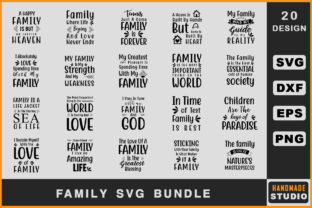
A Family Bundle typically consolidates multiple individual accounts or services into a single subscription tier, often at a discounted rate. However, beyond the financial arithmetic, these bundles serve a psychological and social function. They create a unified digital or experiential ecosystem where members can interact, share, and grow together. When evaluating whether a specific Family Bundle is the right fit for your situation, it is essential to look past the marketing copy and assess how well the offering supports the reality of modern family dynamics. After all, "tennis just a game, family is forever," and the tools we use should facilitate lasting connection rather than temporary distraction.
Defining the Distinct Value of Bundled Services
To make an informed decision, one must first understand what distinguishes a true Family Bundle from a simple multi-user license. While many services allow multiple logins, a dedicated bundle often includes features specifically designed for household management and communal engagement. These may include parental controls, shared calendars, collaborative playlists, pooled storage, or exclusive content accessible only to the group. This distinction matters because "the family is one of nature’s masterpieces," and a generic multi-account setup often fails to accommodate the complex interplay of ages, interests, and privacy needs within a home.
The distinct value also lies in the reduction of administrative friction. Managing four separate subscriptions requires four separate billing cycles, password resets, and preference settings. A cohesive bundle centralizes this management. For many users, this simplification is not merely a convenience but a necessity for maintaining harmony. As noted in the adage, "a house is built by hands, but a home is built by heart." By removing logistical barriers, a well-designed bundle allows families to focus less on account management and more on the meaningful interactions that define a home.
Comparing Bundles Against Individual Subscriptions
When researching options, the primary comparison point is usually cost versus flexibility. Individual subscriptions offer maximum autonomy; each member curates their own experience without interference. In contrast, a Family Bundle introduces a layer of interdependence. This tradeoff is significant. If household members have vastly different consumption habits or privacy requirements, the savings of a bundle might be outweighed by the frustration of shared algorithms or restricted profiles.
However, for households with overlapping interests or a desire for shared activities, the bundle offers superior value. Consider the sentiment: "My greatest pleasure is spending time with my family." If your goal is to watch movies together, play cooperative games, or organize household tasks, individual accounts create silos that hinder these activities. A bundle breaks down these silos. Financially, the break-even point for most bundles is typically two to three users. If you have four or more members, the per-person cost drops significantly. Yet, buyers should be wary of paying for unused capacity. "Sticking with your family is what makes it a family," but sticking with a premium tier when only basic features are utilized is simply poor resource allocation.
Assessing Strengths and Tradeoffs
Evaluating a Family Bundle requires a balanced view of its operational realities. The strengths are evident in centralized billing, shared content libraries, and built-in communication tools. These features reinforce the idea that "family where life begins and love never ends," providing a continuous thread of connection across different devices and locations. For parents, the ability to monitor and guide usage through a single dashboard is often a deciding factor, echoing the belief that "my family was my guide to my reality."
Conversely, the tradeoffs often involve data privacy and personalization. In some bundled ecosystems, usage data may be aggregated to improve recommendations for the group, potentially diluting individual preferences. Furthermore, if the primary account holder cancels or changes payment methods, all members lose access simultaneously. This dependency can be problematic for adult children or extended family members who require stability. It is crucial to ask: Does this bundle respect individual boundaries while fostering unity? "My family is my strength and my weakness," and the technology we adopt should amplify the strength without exacerbating the weakness of over-dependence.
Determining Fit: When to Choose a Bundle vs. Alternatives
Not every household is an ideal candidate for every Family Bundle. Decision-making should be driven by specific use cases rather than general assumptions. A bundle is likely the right choice if:
- Shared Experiences are a Priority: You actively seek content or tools to enjoy together. As the quote suggests, "I absolutely love spending time with my family," and the bundle facilitates this intentionality.
- Household Logistics Need Streamlining: You are managing schedules, chores, or media for children and want a single source of truth.
- Budget Optimization is Critical: You have verified that the collective cost is lower than the sum of necessary individual plans.
- Safety and Guidance are Required: You need robust, integrated parental controls that work seamlessly across devices.
Alternatively, individual subscriptions or different categories of services may be preferable if:
- Privacy is Paramount: Adult members prefer completely separate data footprints and recommendation engines.
- Interests are Divergent: There is zero overlap in content consumption or utility needs, making shared features irrelevant.
- Flexibility Trumps Savings: Members anticipate frequent changes in residence, employment, or relationship status that would complicate a shared billing arrangement.
In these scenarios, the bundle may introduce friction rather than value. Remember that "in time of test, family is best," but technology should not become the test itself. If the administrative burden of maintaining a bundle causes stress, the alternative is often the healthier choice.
Practical Considerations for Long-Term Satisfaction
For those who determine that a Family Bundle is the appropriate path, successful implementation depends on setting expectations and utilizing features effectively. It is not enough to simply purchase the bundle; one must integrate it into the family culture. "I stay in tune with my family and God," and for many, staying in tune extends to how they manage their shared digital and physical environments. Regular check-ins regarding what is working and what isn't can prevent resentment over unused features or privacy concerns.
Furthermore, consider the longevity of the commitment. "The love of a family is life’s..." enduring foundation, but subscription models are transient. Evaluate the cancellation policy, the ease of adding or removing members, and the portability of data. A rigid bundle that locks you in during life transitions is a liability. The best bundles adapt as children grow, as members move out, or as interests evolve. "A happy family is but an earlier heaven," and part of that happiness is the freedom to change without penalty.
Evaluating Emotional and Social ROI
While financial ROI is easy to calculate, the emotional return on investment is harder to quantify but equally important. Does the bundle encourage interaction, or does it merely facilitate parallel isolation? "The most important thing in the world is family and love," so a bundle that enables collaborative storytelling, shared photo albums, or multiplayer gaming offers intangible value that exceeds its monthly fee. Conversely, a bundle that provides unlimited content but no mechanism for sharing may inadvertently reduce quality time.
Users should also reflect on the sentiment: "I have a great family, I live an amazing life." Does the bundle enhance this amazing life, or does it add clutter? "I sustain myself with the love of family," and the resources we bring into our homes should sustain rather than drain us. "Family is a life jacket in the stormy sea of life," and in a practical sense, the right bundle acts as a stabilizer, keeping everyone connected and supported amidst the chaos of modern living.
Making the Final Decision
Ultimately, choosing a Family Bundle is a decision about values as much as utilities. It requires honest assessment of your household's size, budget, technical comfort, and relational goals. "The family is the first essential cell of human society," and equipping that cell with the right tools is a responsible act of care. Whether you opt for a comprehensive bundle or a collection of individual services, the goal remains the same: to support a thriving, connected household.
Take the time to trial options, read the fine print regarding data sharing, and discuss the choice with all affected members. "In time of test, family is best," and making decisions collaboratively ensures that the chosen solution truly serves everyone. By approaching the evaluation process with patience and clarity, you can find a solution that honors the truth that "family is forever," providing a platform for connection that endures well beyond the next billing cycle.