Upper Lower Case Match: Easter Letter Activity
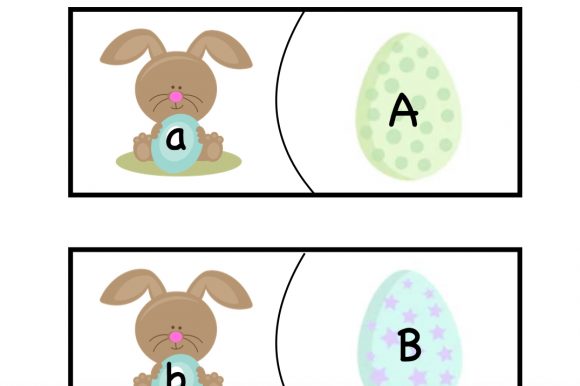
Spring brings a natural opportunity to blend seasonal excitement with foundational learning, and the Upper Lower Case Match - Easter activity does exactly that. At its core, this resource is a tactile matching game where children pair an egg featuring an uppercase letter with a bunny displaying the corresponding lowercase letter. While the concept is simple, the application varies significantly depending on who is using it. For a parent at home, it might be a quiet morning activity; for a preschool teacher, it could be a structured literacy center; and for a content creator or small business owner, it represents a specific type of digital product that balances aesthetic appeal with educational utility. Understanding these distinct perspectives helps determine if this specific Easter-themed alphabet match aligns with your current goals, whether they are pedagogical, creative, or commercial.
Educational Value for Teachers and Homeschoolers
For educators and homeschooling parents, the primary priority is learning efficacy combined with engagement. Alphabet recognition is a critical milestone in early literacy, but rote memorization can quickly lead to disengagement in young learners. The Upper Lower Case Match - Easter activity addresses this by leveraging thematic relevance. When children are already excited about bunnies and eggs, their cognitive load regarding the context decreases, allowing more mental energy to focus on the content.
Experienced educators often evaluate resources based on differentiation and durability. This matching game supports visual discrimination skills, which are prerequisites for reading fluency. Because the uppercase and lowercase forms of letters like 'B/b' or 'D/d' look visually distinct, pairing them requires active cognitive processing rather than passive recognition. Furthermore, the instruction to print and laminate speaks directly to the practical needs of a classroom environment. Paper alone cannot withstand the handling of twenty preschoolers. Laminating transforms a disposable worksheet into a reusable learning manipulative that can be wiped clean after sticky fingers have had their turn. For teachers managing tight budgets, this reusability improves the cost-per-use ratio significantly compared to single-use worksheets.
Adapting for Different Skill Levels
Versatility is another key factor for this audience. A beginner learner might only work with three to five letter pairs at a time to avoid overwhelm, while an advanced student might race against a timer or sort the matched pairs alphabetically afterward. Educators value resources that allow for this flexibility without requiring extensive modification. The simple egg-and-bunny format provides a consistent visual anchor even as the difficulty scales up or down.
Practical Benefits for Parents and Caregivers
Parents and caregivers often have different priorities than formal educators. Ease of use, speed of setup, and independent play potential usually top the list. After a long day, few parents want to assemble complex crafts or explain convoluted rules. The Upper Lower Case Match - Easter activity succeeds here because the mechanic is intuitive: match the egg to the bunny. There is no ambiguity in the task, which fosters confidence and independence in children aged three to six.
The "print and laminate" aspect also appeals to parents looking for sustainable activities. Many families are moving away from disposable paper crafts toward reusable resources that reduce waste and clutter. Once laminated, this set can be stored in a basket and pulled out repeatedly throughout the Easter season or even saved for younger siblings in future years. For parents facilitating playdates or managing multiple children, having a self-directed activity that reinforces school-readiness skills without constant adult supervision is invaluable. It bridges the gap between entertainment and education seamlessly, turning screen-free time into productive developmental practice.
Perspectives for Creators and Digital Product Sellers
If you are a blogger, freelance designer, or publisher evaluating this type of resource, your lens shifts toward market fit and production quality. Seasonal educational printables are a competitive niche. Success depends on how well a product like Upper Lower Case Match - Easter balances clear typography with attractive illustration. From a design perspective, the font choice matters immensely. Educational resources must use school-standard fonts (such as those with a straight-line 'a' and 'g') rather than decorative scripts that confuse emerging readers.
Creators should also consider the user experience post-download. Are the cutting lines clear? Is the layout optimized for standard paper sizes to minimize waste? Does the design leave adequate white space for lamination trimming? These technical details distinguish professional-grade resources from amateur ones. For marketers and bloggers promoting this activity, highlighting the dual benefit of "seasonal fun" and "literacy practice" captures both emotional and practical search intent. Demonstrating the laminated end-product in photos or videos builds trust by showing prospective buyers exactly what the durable final result looks like, addressing concerns about longevity before purchase.
Evaluating Commercial Viability
For small business owners selling printable bundles, this activity serves as an excellent low-ticket entry point or bundle filler. Its broad appeal across pre-K and kindergarten demographics makes it a reliable evergreen seller during spring months. However, reliability depends on original artwork and licensing compliance. Professionals know that using unlicensed clip art can jeopardize a business, so evaluating the source and rights associated with any Easter matching template is a necessary due diligence step before listing or promoting it.
Determining If This Resource Fits Your Needs
Not every Easter activity suits every context. Before downloading or purchasing an Upper Lower Case Match - Easter set, consider your specific constraints and objectives.
- For Beginners: If your child is just starting to recognize letters, ensure the set uses high-contrast colors and uncluttered designs. Complex backgrounds can distract from letter identification.
- For Budget-Conscious Users: Verify that the file is formatted for home printers. Some resources require expensive ink-heavy full-page backgrounds, while others offer ink-saver versions that maintain educational value at a lower printing cost.
- For Special Education Needs: Consider whether the visual style is overstimulating. Some learners benefit from minimalist black-and-white versions that can be colored in as part of the matching process, adding a fine motor component.
- For Commercial Use: Always check the license terms. Personal use licenses do not permit inclusion in products for sale, and misunderstanding this distinction can lead to legal issues.
Ultimately, the value of this activity lies in its alignment with your specific situation. A beautifully designed matching game is useless if the font confuses your students, and a perfectly pedagogical resource fails if it takes too long to prepare for a busy parent. By assessing factors like durability requirements, design clarity, preparation time, and intended usage rights, you can determine whether this particular Upper Lower Case Match - Easter resource will serve as a meaningful tool or merely another digital file. When the fit is right, however, it offers a delightful intersection of springtime joy and tangible literacy growth that resonates across homes, classrooms, and creative businesses alike.