2024 Digital Planner Goodnotes Xodo: Integrating Structure into Daily Workflows
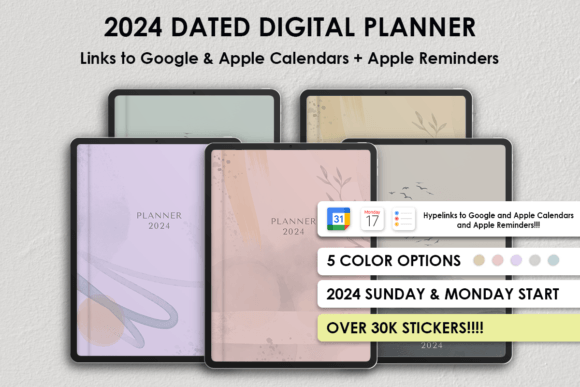
The transition from paper to digital planning is rarely about abandoning analog methods entirely; it is usually about enhancing them with connectivity and searchability. The 2024 Digital Planner Goodnotes Xodo edition serves as a central operating system for professionals, students, and creators who require the tactile familiarity of handwriting combined with the efficiency of digital navigation. Unlike static PDF documents, this planner functions as an interactive dashboard compatible with major annotation platforms like Goodnotes, Notability, and Xodo. It bridges the gap between spontaneous ideation and structured execution, allowing users to manage complex schedules across iPad and Android tablets without losing the cognitive benefits of manual writing.
For busy professionals and entrepreneurs, the value lies in how this tool fits into existing productivity ecosystems. It does not replace your project management software or cloud storage; rather, it acts as the daily interface where high-level strategy meets granular task management. By leveraging hyperlinked navigation and direct calendar integration, the planner reduces friction between planning and doing, ensuring that time spent organizing translates directly into actionable output.
Technical Compatibility and Environment Setup
Before integrating the 2024 Digital Planner Goodnotes Xodo into your routine, establishing a stable technical environment is essential for long-term consistency. While the planner is designed for broad compatibility, performance varies depending on the host application and device specifications.
- Goodnotes Users: Ensure you are running the latest version to support advanced hyperlinking and layer management. Import the planner as a new notebook rather than a document to enable tabbed navigation and automatic backup features.
- Xodo and Android Users: Xodo offers robust PDF annotation capabilities that mirror Goodnotes' functionality. When using Android tablets, verify that the stylus latency settings are optimized within the app to ensure the writing experience feels responsive during rapid note-taking.
- Notability Integration: For users who prefer audio syncing, this planner works seamlessly with Notability’s recording feature, making it ideal for students and meeting-heavy professionals who need to correlate handwritten notes with verbal discussions.
Cross-platform synchronization is a critical factor for users switching between devices. If you use Goodnotes on iPad and Xodo on an Android tablet, store the master planner file in a cloud service like Google Drive, Dropbox, or OneDrive. This ensures that updates made on one device are accessible on the other, maintaining continuity in your planning process regardless of hardware preference.
Navigational Architecture for Efficient Workflow
The primary advantage of a digital planner over a physical one is non-linear navigation. The 2024 Digital Planner Goodnotes Xodo utilizes a comprehensive hyperlink system that mimics the speed of a web browser. Understanding this architecture allows you to move through your day without the mechanical delay of flipping pages.
The planner includes hyperlinked tabs for monthly, weekly, and daily views. In a practical workflow, this means you can review your monthly objectives during a strategy session and instantly jump to a specific week to allocate resources, then drill down to a daily page to schedule execution blocks. This rapid context switching supports agile planning methodologies where priorities shift frequently. Instead of losing momentum searching for a specific date, the interactive elements keep you focused on decision-making.
Furthermore, the inclusion of clickable links to Google and Apple calendars transforms the planner from a passive record into an active scheduling hub. When reviewing your weekly spread, you can tap directly to your external calendar to check real-time availability or add events. This bidirectional flow prevents double-booking and ensures your handwritten intentions align with your digital commitments.
Included Pages and Structural Components
To maximize utility, familiarize yourself with the specific pages included in this edition. Each section serves a distinct function within a broader productivity framework:
- Yearly Calendar: Provides a macro view for marking major deadlines, holidays, and quarterly milestones. Use this for high-level capacity planning before breaking goals down into smaller units.
- Monthly Spreads: Designed for setting thematic focuses and tracking key deliverables. These pages act as checkpoints to review progress against annual objectives.
- Weekly and Daily Pages: The core operational area. Weekly spreads allow for batch planning, while daily pages offer space for time-blocking, task lists, and reflective journaling.
- Goal Setting and Habit Tracking: Interactive sections dedicated to personal and professional development. These are not merely decorative; they provide visual feedback loops that reinforce consistency.
Application Across Professional and Personal Contexts
The versatility of the 2024 Digital Planner Goodnotes Xodo becomes apparent when applied to specific workflows. Different user groups leverage the same structural elements to solve unique organizational challenges.
Project Management and Business Operations
For small business owners and freelancers, the planner serves as a companion to tools like Trello, Asana, or Notion. While those platforms manage databases and team collaboration, the digital planner manages your personal relationship with the work. During the planning phase of a project, use the weekly spreads to map out sprints or content calendars. During execution, use the daily pages to track deep work sessions and capture ad-hoc ideas that arise during the process. After project completion, the dated entries serve as an archive for retrospectives, helping you analyze time estimation accuracy and workflow bottlenecks.
Academic and Learning Workflows
Students and educators benefit from the planner’s ability to consolidate disparate information sources. Before a semester begins, populate the yearly and monthly calendars with exam dates and assignment deadlines. During lectures or study sessions, utilize the freeform nature of digital annotation to draw diagrams, paste screenshots from textbooks, and link to external research papers directly onto the planner pages. The habit tracking features can be repurposed to monitor study hours or revision cycles, providing data-driven insights into learning patterns.
Creative Processes and Content Creation
Creators and marketers often struggle with balancing inspiration and administration. This planner accommodates both by offering structured spaces for logistics alongside blank areas for brainstorming. Use the goal-setting sections to define content pillars and audience growth targets. On a tactical level, use daily pages to script videos, draft outlines, or sketch storyboards. The ability to rearrange digital stickers and resize text boxes allows creative plans to evolve organically without the mess of erasures and crossed-out lines found in paper planners.
Best Practices for Long-Term Consistency
Adopting a new planning system requires behavioral adjustment. To ensure the 2024 Digital Planner Goodnotes Xodo remains a useful tool rather than a novelty, implement these practical maintenance strategies.
Establish a Review Ritual: Digital planners lack the physical presence of a paper book on a desk, which can lead to "out of sight, out of mind" syndrome. Schedule a recurring 10-minute block each morning and evening specifically for interacting with the planner. Use the morning session to set intentions via the daily page and the evening session to migrate unfinished tasks and reflect on wins.
Leverage Templates and Stickers Wisely: While customization is appealing, excessive decoration can become a form of productive procrastination. Create a standardized set of functional templates for recurring tasks (e.g., meeting notes, project briefs) to reduce setup time. Use stickers primarily for visual coding—such as color-coding urgent tasks or categorizing projects—to enhance scannability rather than just aesthetics.
Data Integrity and Backups: Treat your digital planner as a critical business asset. Enable auto-backup in your annotation app and periodically export full PDF copies to external storage. This protects against app corruption or accidental deletion and allows you to archive completed years for future reference without bloating your active workspace.
Balance Analog Feel with Digital Power: Resist the urge to type everything. Research suggests that handwriting improves memory retention and conceptual understanding. Use the stylus for processing complex thoughts, brainstorming, and emotional reflection. Reserve typing and copy-pasting for logistical data, URLs, and standardized text. This hybrid approach maximizes the cognitive benefits of the medium.
Optimizing for Productivity Outcomes
Ultimately, the effectiveness of the 2024 Digital Planner Goodnotes Xodo is measured by its impact on your output and mental clarity. It is designed to reduce the cognitive load associated with remembering obligations, freeing up mental bandwidth for high-value work. By centralizing your schedule, goals, and notes in a single, searchable, and portable interface, you eliminate the fragmentation that plagues modern knowledge work.
Whether you are managing a marketing campaign, navigating graduate school, or building a freelance business, this planner adapts to your evolving needs. Its strength lies not in rigid enforcement of rules, but in providing a flexible scaffold that supports your unique way of working. Start by mapping out your current pain points, customize the planner to address them, and iterate on your system as you go. The goal is not a perfect planner, but a sustainable practice that empowers you to achieve more with less stress.