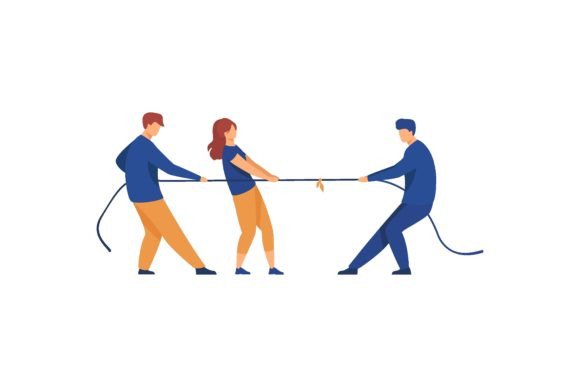
People Pulling Opposite Ends of Rope Fla Vector Art
Visual metaphors are the shorthand of modern digital communication, and few images capture workplace dynamics quite like people pulling opposite ends of rope fla style illustrations. This specific flat vector depiction transforms a literal game of tug of war into a sophisticated symbol for corporate rivalry, team alignment, or strategic negotiation. Unlike complex 3D renders or photorealistic stock photography, this graphic art relies on clean lines, bold colors, and simplified forms to convey energy and tension without visual clutter. It epitomizes the classic competition amid office laborers, offering designers and communicators a versatile asset that speaks to both conflict and collaboration.
The appeal of this unique flat vector illustration lies in its ability to be fleetingly relatable yet universally understood. Whether you are designing an internal HR newsletter, a pitch deck for investors, or a blog post about organizational change, the imagery of a rope pull immediately establishes context. However, how you evaluate and utilize this asset depends heavily on your role, technical skill level, and the specific message you intend to convey. Understanding these nuances ensures the graphic serves your project effectively rather than becoming just another generic clip-art placeholder.
Why Visual Metaphors Matter Across Different Roles
Different professionals approach visual assets with distinct priorities. A marketer might prioritize emotional resonance and click-through rates, while a web developer focuses on file size and rendering speed. The "people pulling opposite ends of rope fla" concept bridges these gaps because it is inherently modular. For content creators and bloggers, this illustration serves as a narrative anchor. When writing about difficult topics like budget cuts, departmental silos, or competitive market analysis, text alone can feel heavy or abstract. Introducing a playful tug of war showdown softens the blow, making complex business challenges feel manageable and human. It allows writers to discuss friction without inducing anxiety, using the visual narrative of rivalry and gusto to keep readers engaged.
For educators and corporate trainers, the value shifts toward pedagogical utility. In a workshop setting, this graphic can act as a prompt for discussion. Instead of simply telling employees about conflict resolution, a facilitator can display the vector and ask participants to identify who is pulling, why they are pulling, and what happens if the rope breaks. Here, the priority is not aesthetic perfection but clarity and interpretability. The flat design style is particularly advantageous in this context because it removes distracting details, allowing learners to focus entirely on the underlying concept of power struggle and cooperation.
Evaluating Quality and Technical Flexibility
When selecting or creating this type of vector art, technical specifications matter as much as artistic style. Experienced designers and agencies will scrutinize the file structure before integration. A high-quality flat vector should have organized layers, named groups, and editable anchor points. This flexibility is non-negotiable for professionals who need to adapt the "people pulling opposite ends of rope fla" asset to match specific brand guidelines. Can you change the shirt colors to match your company palette? Can you adjust the angle of the rope to fit a wide hero banner versus a square social media post? If the vector is flattened or rasterized, it loses its primary advantage: infinite scalability and customization.
Beginners and small business owners often face a different set of evaluation criteria. Ease of use and cost typically take precedence over granular editability. For a freelancer creating a quick proposal or a local business updating their website, a pre-made vector pack that includes this tug of war motif offers immediate value. The priority here is speed and reliability. They need an asset that looks professional out of the box without requiring hours of manipulation in Adobe Illustrator. However, even novice users should verify licensing terms. Commercial value is a critical factor; ensuring the illustration can be used in client work or monetized content prevents legal headaches down the road.
Practical Applications by User Type
- Marketers and Advertisers: Use the illustration in A/B testing for email campaigns. Test whether the metaphor of "pulling together" versus "pulling apart" generates higher engagement when discussing product launches or service updates.
- HR and Internal Comms: Incorporate the graphic in onboarding materials to visualize cultural values. It can represent healthy competition in sales teams or the importance of unified direction during mergers.
- Web Designers: Utilize the flat style to maintain site performance. Vectors load instantly compared to photos, improving Core Web Vitals while adding personality to otherwise sterile corporate layouts.
- Startup Founders: Employ the visual in pitch decks to illustrate market positioning. Showing your team pulling against established incumbents creates a compelling underdog narrative that resonates with venture capitalists.
- Hobbyists and Crafters: Adapt the clean lines for physical media. The bold shapes translate exceptionally well to vinyl cutting, screen printing, or embroidery for team-building event merchandise.
Balancing Creativity with Professional Context
While the "playful tug of war showdown" description suggests levity, context dictates appropriateness. There is a fine line between engaging visual storytelling and trivializing serious issues. Professionals must exercise judgment when deploying this imagery. Using a cartoonish rope pull to illustrate a sensitive topic like layoffs or legal disputes would likely backfire, appearing tone-deaf. Conversely, using it to depict innovation sprints, friendly departmental competitions, or overcoming technical debt aligns perfectly with the asset’s inherent vivacity.
Creativity also involves subverting expectations. Rather than always showing two equal sides struggling, consider modifying the vector to tell a deeper story. What if one side is pulling effortlessly while the other struggles? What if the rope is tangled? What if both teams are actually pulling in the same direction but facing away from each other? These variations transform a standard stock concept into bespoke commentary. For creators, this is where long-term usefulness lies. An asset that can be remixed and recontextualized provides far more ROI than a static image used once and discarded.
Determining If This Asset Matches Your Goals
Before integrating people pulling opposite ends of rope fla graphics into your workflow, assess your current needs against the asset's strengths. If your goal is hyper-realism or conveying specific demographic data, flat vector art may fall short. Photography or detailed 3D renders might be superior choices for those specific objectives. However, if your goal is conceptual clarity, brand consistency, and lightweight design, this style is unmatched.
Consider also the longevity of the asset. Flat design has remained relevant for over a decade because it prioritizes function over fleeting trends. Investing in high-quality vector illustrations of this nature is often a sustainable choice for building a visual library. Unlike trendy 3D clay morphism or AI-generated noise textures that may date your content within months, clean geometric representations of human interaction tend to age gracefully. For publishers and agencies managing evergreen content, this reliability reduces the frequency of necessary redesigns.
Ultimately, the decision comes down to alignment between medium and message. This unique flat vector illustration excels at turning abstract business concepts into tangible visual narratives. It captures the essence of effort, opposition, and unity in a format that is accessible to beginners yet robust enough for experts. By understanding how different audiences—from educators to entrepreneurs—derive value from this specific type of graphic art, you can make informed choices that elevate your design projects from mere decoration to strategic communication tools. Whether accentuating a dynamic contest or highlighting collaborative challenges, the humble tug of war remains a potent symbol when executed with intention and finesse.